Irish dancing classes in Derby rhythm first, medals never
Adult Irish dancing in Derby with the terms printed on the door: £10 a time or £32 for four, the hired room already inside that figure, nothing to enrol in and nothing to win. The class exists the moment enough Derby names ask for it, which is the only start date anybody here can honestly offer.
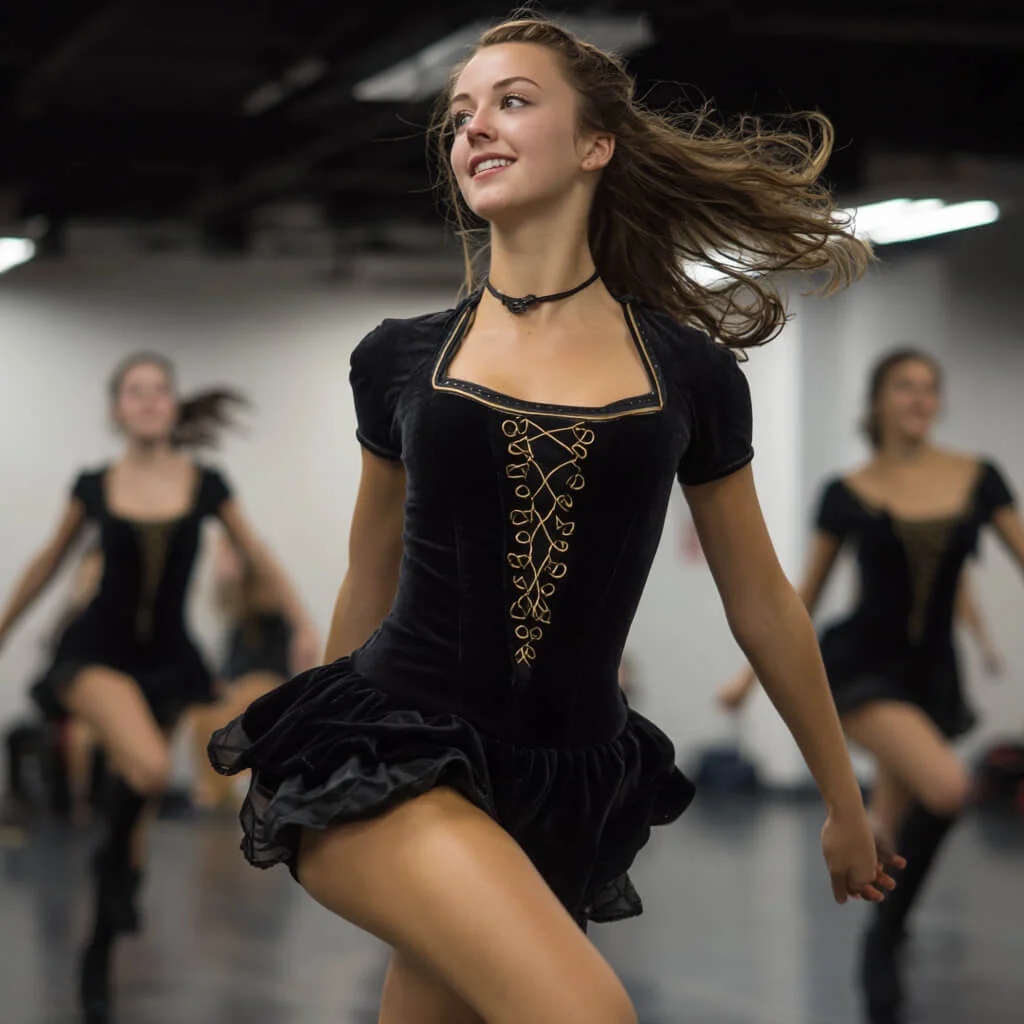
Loud feet, deliberately quiet arms
The legs work like a drum kit while the rest of you does almost nothing, and holding those two ideas inside one body is the whole beginner project. It looks impossible for a fortnight. Then it stops.
Put the name down while the thought is still warm
Four fields and a dropdown, and not one of them asks you to prove anything. No card details are kept, no level is claimed, no obligation attaches to your name. Once the Irish dancing list reaches the size that makes hiring a room sensible, everybody on it gets the same message with the venue, the date and the start — and only then does anyone decide whether a tenner changes hands.
Postcodes do real work here: three or four names clustered around Ilkeston genuinely tilt the hired room in that direction.
The dance most people meet at nine and never again
"Almost everyone who has done this did it in a costume, aged eleven, being scored by a stranger. Almost nobody has done it in trainers, for the pleasure of the noise." The gap this list exists to fill
Beginners start where the sound starts: weight forward onto the balls of the feet, a spine that stops apologising, and the count of a reel drummed out slowly enough to hear. After that come the sevens and threes that carry you sideways, the treble that gives the floor its rattle, and eventually the cut and the hop-back that make the whole thing recognisable. Nothing is hurried towards a set piece, because there is no set piece waiting at the end.
The arms stay down and still, which is the detail that unnerves adults most — no hands to hide behind and nowhere sensible to put the nerves. It is also exactly why the style reads so cleanly across a room. Whoever teaches your hour builds it around the legs actually standing in front of them; nobody promises a syllabus in advance here, and nobody is grading what you produce.
Any flat shoe with a bit of sole gets you through the early weeks. Soft shoes are a purchase for whenever you feel like owning a pair — we do not lend, sell or stock footwear, and none is needed to begin.
Why no day, no time and no term appear on this page
One session£10 handed over on arrival, hired room already inside the number.
£10Four sessions£32 once the calves have agreed to the idea.
£32Everything elseMedals, grades, adjudicators, costume bills, minimum weeks.
noneAdult dance around Derby is sold almost entirely as a fixed weekly slot bought in blocks, plans or full terms, with the price usually kept behind a contact form. Here that sequence gets reversed at both ends. The number is printed above, the room is hired only once its list justifies the hire, and the arrangement collapses gracefully if you stop turning up: nothing lapses, nothing renews, nobody sends a note about the four weeks you paid for and missed. If the dance hooks you — and it hooks people who fully intended to try it once — the block of four is sitting there waiting. If it does not, you are out one tenner and one evening.
Convinced enough?A style this specific only opens if people ask for it out loud.
Join the list ↑Two letters from the Irish dancing list
"I did this until I was twelve and then life happened. Thirty years later I can still hear the count, which was the strangest discovery of the whole first hour. Nobody asked me to prove anything or pin a number on my back."
"I put my name down expecting nothing and got a message a few weeks later with a room and a start time. I pay on the way in, I have missed two of them without consequence, and my downstairs neighbours have started asking questions."
The questions that come in most
Most of these are one worry wearing different hats — that this is a closed world with its own rules and you have missed the entrance. You have not; there is not one.
Is there a competition circuit waiting at the end of this? +
No. Nothing here feeds a feis, a medal table or an adjudicator’s sheet — the hour exists for the dancing and stops there.
Why do the arms stay pinned to the sides? +
Because the discipline is the split: everything expressive happens below the knee while the rest of you stays composed.
Do I need ghillies before the first session? +
No. Flat shoes you already own are fine at the start; we do not lend or sell footwear, and soft shoes are a later indulgence.
What does one hour of this actually cost? +
£10 on arrival, or £32 for four if you would rather buy ahead. Room hire sits inside both numbers already.
Is it harder on the legs than it looks? +
Honestly, yes — calves notice first. The early weeks are paced for adult bodies rather than competition timetables.
Do adults ever dance this in sets together? +
Often. Group figures suit a beginner room enormously, and the teacher makes that call once the numbers are known.
How near to the city centre is it? +
Central Derby, near enough. A room gets hired for the purpose once the list is large enough to warrant it.
I danced this aged nine — does that help? +
More than you would expect. The count tends to survive decades of neglect even when the footwork has quietly left.